Sunday, July 6, 2008

Oscar "Floresita" Velasco O'Farrill - Trumpet - 1955 Cuba

The Original 1955 pressing and LP cover on the Riverside label. Cover artwork by 'Gene Gogerty'.
According to 'Gregorio "El Goyo" Hernández', this was the first "commercially released" LP of "Cuban rumba".
(info via Patrice Banchereau)


The CD reissue above.
 (They changed the text and changed the cover artwork a bit.)


Same record reissued as:
"La Rumba y la Conga - Coro y Percusion Cubana"
LP cover on the I.C.A.I.C. label.
1960 -'61

The CD reissue above.


All 12 Sones all by prolific composer
'Bienvenido Julián Gutiérrez'


"Sones De Ayer"
The original 1958 vinyl/LP cover on Gema.

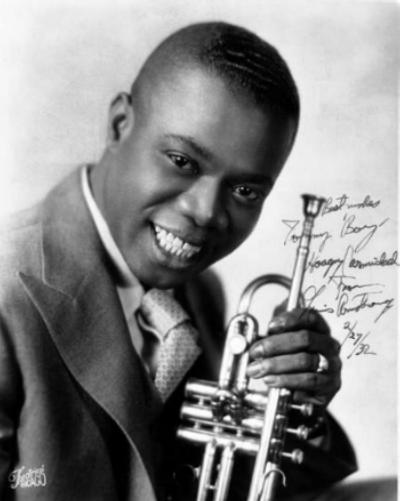
Two recordings which showcase the sublime trumpet playing of the great Oscar "Floresita" Velasco O'farrill.


This post is really for "Floresita", not for the so called "star players".

In an interview with Felix Chappottin he says that "Floresita" was the major influence on him when he was a young man. Some absolutly beautiful trumpet playing by "Floresita" can be heard on these two sessions which both have been reissued and preserved on CD.
Additionally,
"Floresita" can be heard playing in Arsenio Rodriguez' conjunto (box set) and his superb playing can also be heard on the LP "Cuba Baila" .

#1- "Festival In Havana" 1955 was released as an American pressing on the Riverside record label. And reissued on CD in 2003 on Milestone.
#2- "Sones De Ayer" 1958 LP.
Reissued 1995 as "Miguelito Cuni con Septeto de Bienvenido Julian Gutierrez.
On an Egrem CD.
"Festival in Havana" is a true 1955 "classic".
Floresita's sublime trumpet playing is heard on all the six Havana style 'Congas'.

Playing true "Havana style" trumpet for the "Conga" rhythm that is performed with the carnival Comparsa groups is highly stylistic and an art form not to be confused with playing "Son".Carlos Embale singing and a multitude of historically important and legendary drummers.He is the only horn player in both of these sessions.
Miguelito Cuní with a Septeto, playing Sones written by the great Bienvenido Julián Gutiérrez ("Sones De Ayer")Another excellent recording again showing "Floresitas" literally "sublime" trumpet playing.... this time playing 'Sones' ('Son'). I don't have words to describe Miguelito Cuní's voice.... not only on the Sones, but the boleros as well.
"Niño" Rivera is the tresero on this.
Lily Martinez and Nené Pedroso: piano.
Bienvenido Cardenás: Bass.

And the bongocero is Papa Kila.
This has nothing to do with "old" school.... it has everything to do with "the school".For me... Floresita was the best trumpet player within this musical idiom.... hands down.
Felix Chappottin & Chocolate Armenteros
both being fine trumpet players with thier own unique individual sound may both have more "notoriety", but if you listen "closely" to Chappo' y Choco', you will hear Floresita.Floresita didn't play in the upper registers so a dog could hear him ten miles away.
He played with pure soul! Alma Cubana.
(and it ain't got nuthing to do with Dizzy Gillespie, Clifford brown, Kenny Dorham or Roy Eldridge)
Oscar "Floresita" Velasco was "the man"!

Video of "Floresita" 
Here

What's with da' "Eyeglasses" ???


Okay, some of you are wondering and some have asked:
"What's the story with da' "Eyeglasses"?

I like this particular style of eyeglass frame.... which was VERY popular throughout latin America, particularly very much so in Cuba during the 1950's and 1960's.  
Most people associate the frame style with Roy Orbison or Buddy Holly. But it was in Latin America and especially in Cuba where the frame was most popular and a major fashion statement.
To me, they had that 50's, 60's "space age-atomic era" thing going on.
There is an eyeglass frame designer here i
n N.Y.C. who unknowingly has a line that looks similar to the real Cuban ones.  
I'd like to get a pair as sunglasses in light brown with green lenses, but at $275.00 a pair, I may wait awhile.


"The Eyeglasses" hall of fame:

"Papa Gallego" a.k.a "Fifo"


Commander Bernabe Ordaz

Generoso 'El Tojo' Jiménez

René Touzet
 Esquivel

Julio Gutierrez
 Leonardo Acosta
 Walfredo De Los Reyes III
 Rolando Aguilo
 
'Samuell Tellez' band musician

Paquito D'Rivera
 Richard Egües
 Juan 'Claro' Bravo' and Daniel Diaz
 The guitarist on the right in Sept. Tipico Habanero

 The violinist en Orq. Sensacion
 Roberto Faz
 Bienvenido León

Miguel Chappottin
 Salvador Allende
 Ray Barretto

Below are a different style of Eyeglass frame
that Fidel wore during the 1970's.
They were made by a company named 'Tart'.
Not as nice as the other style.

I think Fidel should be buried in these.
But he'll have to bid for them on Ebay.

Wednesday, July 2, 2008

Alberto / Alfredito Zayas Y Su Grupo Folkorico - 1959 Cuba

"Afro-Frenetic" was later reissued on the
American 'Capitol' record label as "Hi-Fi Cuban Drums" 
For me, the "Afro-Frenetic" standout tracks are
the Abakúa #3 "Aseré" and #6
"Yenguelé Maria".

Yenguelé Maria

"Guaguanson"
The Alberto Zayas classic 1959 Panart LP.
Never reissued.


Alberto Zayas wrote 10 out 12 songs.
This features the beautiful singing style and voice
of Manolo Furé he sings lead on most of this LP,

Manuel 'Manolo' Furé

2. Ponte Saya Colora 
Manolo Furé: lead vocal

7. Pa' la mar serena
Manolo Furé:
coro

8. Mayari Monte Adentro
Manolo Furé: lead vocal
(Zayas sings once briefly before the tres solo)

11. Cumayé
Manolo Furé: lead vocal


* * * * *
Cayetano Baila
Manolo Furé with Los Hermanos Castro.
Manolo Furé: lead vocal


La Timba
Manolo Furé with Tony Tejera y su Conjunto
Manolo Furé: lead vocal

Alberto Zayas was a singer as well as prolific composer and interpreter of 'Rumbas' and 'Sones'.
Born in Matanzas, Cuba Feb. 14 1908, died in *Guanabacoa in1983.
*Guanabacoa was the first place to have an African "Cabildo" in Havana.
His family moved to La Habana when he was one year old.
He began singing at age 14.
He also worked and collaborated often with musicologist & author, 'Fernando Ortiz' as a music consultant when it came to presenting authentic Cuban folkloric music/s.

Superb tres playing especially the solos on 7. "Pa'la Mar Serena" & 8. Mayari Monte Adentro", Saxophone on tracks 2 & 10, Nice 'Marimbula' played by Zayas himself on track 12 and some very tasty piano solos. The bongo playing style is simple and pure Cuban art.


The most beautiful thing about this classic LP..... is the singing, the sweetest, prettiest harmonies you'll ever hear. This was one of my fathers favorite LPs... I remember first hearing this when I was 7 or 8 years old. Of the two LPs, "Guaguanson" is my favorite.
This is Cuban music "free" & "unpolluted" by American rap, funk and Be-Bop"

I've painstakingly "cleaned" & "trimmed"
both vinyl's with
'Goldwave V.5'
Both ripped from original vinyl LP's.
"Afredito" Zayas is 'Alberto Zayas'.
'John Amira' has told me he believes the musican on the back cover wearing the straw hat & playing the Bata drum to be a young 'Mario Jauaregui'.

Alberto Socarras - "Socarras his magic flute" - 1956


Latin Impressions by Socarras his magic flute
1956 Decca vinyl LP


Alberto Socarras: born in Manzanillo, Cuba - clarinet, flute, alto and soprano sax, bandleader.
(1908 - 1987)

Maestro Alberto Socarras is credited with recording the first real jazz flute piece in 1927. Socarras was a highly proficient Cuban clarinetist, and bandleader, who after his arrival in New York, performed with Lew Leslie's Blackbirds, Duke Ellington, Cab Calloway and Louis Armstrong.
In 1938, Alberto Socarras led the
Cuban all Womens 'Orq. Anacaona', taking the band to Paris & London.Though his place in jazz history may be just a footnote, Alberto Socarras played a vital role in the development and nurturing of Latin jazz in its original stages.

Some may find this 1956 LP
"Latin Impressions by Socarras his magic flute" to sound "corny", but if you listen closely to his flute playing & arrangements, you hear just what real "technique" he played with and what a "wizard" he was.
Alberto Socarras was a master of "solffeggio" (
solfège) and taught solffeggio privately in his apartment in New York City well into the 1970's.

These are two songs with El Maestro
Socarras playing flute & clarinet, recorded in 1935, not on the above LP.

Masabi
1935


Pacto Con El Diablo
1935

a>